
₹18 Crore Loan — Scam or a Second Chance?
Let’s get one thing straight first.
The Maharashtra Cabinet has approved an ₹18 crore National Cooperative Development Cooperation (NCDC) loan for the Shri Nilkantheshwar Shetkari Sahakari Sakhar Karkhana at Killari, Latur, associated with BJP MLA Abhimanyu Pawar.
It is a loan. Not an ₹18 crore grant. Not a loan waiver.
So where exactly is the problem? If the objection is simply that a closed sugar factory has received a loan, that argument doesn’t hold much water. The real question is whether the factory deserved an exception to the normal NCDC criteria—and why the Cabinet chose to make that exception.
But before screaming “SCAM!”, perhaps we should look at the story behind the factory.
A factory that survived for 15 years.
The Shri Nilkantheshwar cooperative sugar factory was established in 1971 and is strategically important for farmers between Dharashiv and Latur districts.
It remained shut for nearly 15 years.
Today, around 19,000 farmers are members of the cooperative.
And this is where the story gets interesting.
At a time when several cooperative sugar factories and assets worth hundreds of crores were reportedly sold in the past for a fraction of their value, this factory was not privatised.
Instead, there was a push to revive it through the cooperative sector.
Latur is already a drought-prone region. Agricultural distress and migration of young people to larger cities are realities. 94 Gram Panchayats reportedly wrote to Chief Minister Devendra Fadnavis seeking the revival of the defunct factory.
This wasn’t merely one politician’s demand. It was a demand coming from the local farming community.
Enter MLA Abhimanyu Pawar
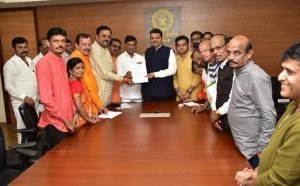
There were reportedly interests from different quarters to take over the factory. At first, it was a Latur Political Family and later the DON of Co-op Sector who wanted this factory; But Pawar pushed for its revival rather than allowing it to be privatised. He took up the issue in Mumbai and met Chief Minister Devendra Fadnavis.
The government ultimately backed the cooperative route. And today, there is something tangible to show for it. A factory that had remained shut for almost 15 years, with machinery that had substantially deteriorated, was restarted.
In the last crushing season, it reportedly crushed 2.70 lakh metric tonnes of sugarcane and paid farmers ₹2,700 + ₹100 per tonne on time—while farmers supplying some neighbouring factories were reportedly still waiting months later.
Its crushing capacity was also increased beyond the earlier unviable 1,250 TCD.
So perhaps the first question shouldn’t be:
“Why did MLA Abhimanyu Pawar get ₹18 crore?” By the way since 2 years this factory has received in total ₹53 crores from Centre and State combined.
It should be:
“Why was this factory allowed to remain dead for 15 years?”
Now, the ₹18 crore
Yes, the Cabinet has approved an ₹18 crore NCDC loan as a special case. Yes, because the factory had remained closed for years, questions were reportedly raised about its eligibility under normal NCDC criteria.
And yes, the Finance and Cooperation Departments reportedly expressed reservations. Those questions deserve answers.
But questions are not proof of a scam.
The ₹18 crore is reportedly intended for capital expenditure and working capital, including complementary projects such as distillery, CBG, cogeneration, solar and related facilities.
Why?
Because today’s sugar industry cannot survive on sugar alone.
The objective is to make the factory competitive and financially sustainable.
So, “Aisa kya hai iss factory mein?”
Maybe the answer is simple:
19,000 farmer members.
Two districts.
A drought-prone region.
15 years of closure.
Thousands of families depend on agriculture.
And a cooperative that survived when many others were sold.
But here’s my real headache.
Now that this “special case” is public, watch the cooperative sugar lobby.
The Sugar Daddy—sorry, sugar mill sharks—cum-politicians of the Mahayuti will inevitably come knocking.
One will ask for a special approval.
Another for a special package.
Then someone will ask:
“Why not waive the interest?”
And eventually:
“Why not waive the loan itself?”
That is where the government must draw the line. Supporting a potentially viable cooperative revival is one thing. Turning the cooperative sector into a political ATM is another. And we have seen enough of that in Maharashtra.
I actually feel for Cooperation Minister Babasaheb Patil and his department. If every failed cooperative now demands its own “special case”, it will ultimately be the Cooperation Department that takes the political and administrative beating.
So let the government be transparent:
Why Killari?
Why ₹18 crore?
What are the repayment terms?
What is the viability plan?
What safeguards are in place?
And is this genuinely a one-off exception?
If the answers are transparent, there is nothing to hide.
And Abhimanyu Pawar?
He should welcome the scrutiny.
Because if his argument is that this factory belongs not to one politician but to 19,000 farmer members, then let the results speak.
A factory formed in 1971.
Closed for 15 years.
Not privatised.
Revived through the cooperative route.
2.70 lakh tonnes crushed.
Farmers reportedly paid on time.
And now an ₹18 crore NCDC loan to strengthen its infrastructure and make it competitive.
That is a very different story from:
“MLA got ₹18 crore.”
The real test now is simple:
Can Shri Nilkantheshwar become a financially sustainable cooperative without repeatedly returning to the government for bailouts?
If yes, MLA Abhimanyu Pawar will have a genuine political achievement to claim.
If not, the questions being raised today will become legitimate.
Until then, let’s not confuse a loan with a grant, and let’s not confuse a Cabinet exception with a scam.
Sometimes, in Maharashtra’s cooperative sector, saving a dead factory may be far more difficult—and far more valuable—than selling it.
Vikrant Meena Hemant Joshi.