
Is Sachin Ahir’s Exit the Final Warning for Uddhav Thackeray’s Shiv Sena?
By Vikrant Joshi
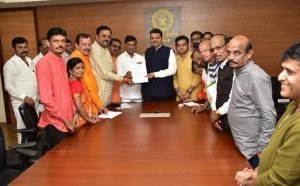
The political churn in Maharashtra refuses to slow down. Just a day after another major development, senior Shiv Sena (UBT) leader Sachin Ahir formally left the party, filed his nomination for the post of Deputy Speaker, and joined the Eknath Shinde camp.
His departure has sparked a question that many political observers have begun asking:
Was Sachin Ahir the last man standing inside Uddhav Thackeray’s Shiv Sena who was actually working for the other side?
Some newspapers even described him as the “Hamza/Dhurandhar” planted inside the party. Whether that description is fair or not is open to debate, but one thing is certain—his exit raises uncomfortable questions about the steady stream of leaders who have abandoned Uddhav Thackeray over the last few years.
A Crucial Leader in Worli
Sachin Ahir has always been an influential leader in Mumbai politics, particularly in Worli, the constituency represented by Aaditya Thackeray. His entry into the Shinde camp significantly strengthens the ruling alliance’s position in the area. It also gives them the confidence to field a serious challenger against Aaditya Thackeray in the 2029 Assembly elections. Interestingly, Aaditya Thackeray revealed that on the morning Sachin Ahir quit the party, Ahir personally assured him that he would never contest an election against him. While that sounds reassuring, I believe a more meaningful assurance would have been different.
Instead of saying, “I won’t contest against you,” Sachin Ahir could have said:
“I will not campaign for or support any candidate contesting against you.”
That would have reflected political grace.
After all, it was Uddhav Thackeray and Aaditya Thackeray who revived Sachin Ahir’s political career after his defeat in 2019. He was later nominated to the Legislative Council in 2022 when Shiv Sena was still united. Members of his family were also entrusted with important responsibilities within party-controlled institutions.
Politics is about relationships as much as it is about power. A gesture like that would have been remembered with respect.
Everything Changed on 25th November 2019
To understand today’s political developments, we need to revisit one date:
25 November 2019.
At the time, President’s Rule was in force in Maharashtra. The Maha Vikas Aghadi government was on the verge of being formed. Around 162 MLAs gathered at Mumbai’s Grand Hyatt Hotel in what was effectively a massive show of strength. The gathering included leaders from Shiv Sena, the Nationalist Congress Party and the Congress. Sharad Pawar, Uddhav Thackeray, Ashok Chavan and several senior leaders stood together, signalling that the BJP would remain out of power. One senior Congress leader, Ex CM Prithviraj Chavan, was in Delhi at the time, reportedly working to ensure that the trust vote would take place through an open ballot rather than a secret ballot. That decision proved politically significant. The Maha Vikas Aghadi eventually formed the government.
A Photograph That Changed Maharashtra Politics
Sometimes a single photograph becomes a political turning point. That image of 162 legislators standing united behind Maha Vikas Aghadi may have done exactly that. In my opinion, that photograph stayed in the minds of Prime Minister Narendra Modi, Union Home Minister Amit Shah and Devendra Fadnavis. It represented not merely a coalition government but the BJP being pushed out of power in Maharashtra. The response that followed over the next several years appears to have been systematic. Today, when we look back at that photograph, the political landscape has dramatically changed.
- Shiv Sena has split.
- The Nationalist Congress Party has split.
- Several leaders who once stood together are now in different camps.
- Congress remains, but its influence has weakened.
The alliance that once looked unbreakable has steadily fragmented.
The Future of Sharad Pawar’s NCP
Today, there are widespread political discussions regarding the future of Sharad Pawar’s faction. Some believe it may eventually reunite with the Ajit Pawar-led faction. Others believe it could merge with the Congress. Whichever route is chosen, I believe delaying the decision only increases political uncertainty. Politics rarely rewards hesitation.
Why Didn’t BJP Leaders Desert Their Party?
One question has always intrigued me. When the BJP lost power in 2019, many of its leaders had genuine reasons to feel ignored. Several MLAs never became ministers. Others never received important organisational responsibilities. Yet very few or none of the BJP leaders deserted the party. They remained loyal. Years later, many of them are now enjoying positions of power. Compare that with Shiv Sena (UBT), where leader after leader has walked away. That contrast deserves serious introspection.
Were the Cracks Already Visible?
In my view, the problems did not begin in 2022.
They began much earlier. Several senior Shiv Sena leaders had complained privately—and sometimes publicly—that they found it increasingly difficult to meet Uddhav Thackeray. One senior leader had even written a detailed letter expressing frustration over not getting appointments. Many workers believed there was an invisible wall between the party leadership and ordinary Shiv Sainiks. The complaints continued for years.
The Gatekeeper Problem
Within political circles, there has long been discussion about one influential individual who allegedly controlled access to Uddhav Thackeray and it was not Sanjay Raut. Many leaders believed that unless this person approved, they simply could not meet the party chief. Whether these allegations are entirely accurate is impossible to verify, but the perception became widespread. That perception damaged morale. Several leaders felt disconnected. Others believed their concerns never reached the leadership. Even internal disagreements reportedly emerged over this issue.
Politics is built on communication. When communication breaks down, trust disappears.
Leadership Must Remain Accessible
Every political party survives because its workers believe they can reach their leader. If workers feel unheard for months or years, frustration inevitably grows. Many leaders who later left the party had reportedly expressed concerns long before they finally exited. Perhaps those warning signs deserved greater attention.
Aaditya Thackeray’s Challenge
Aaditya Thackeray represents the next generation of Shiv Sena leadership. He carries enormous political responsibility. Along with the remaining leadership, he now faces perhaps the biggest organisational challenge since the party split. Rebuilding confidence among party workers must become the immediate priority.
Is It Time to Rebuild?
With Raj Thackeray and Uddhav Thackeray appearing politically closer than before, many Shiv Sena supporters hope some form of broader cooperation could emerge in the future.
Whether that actually happens remains uncertain. But one thing is clear. The remaining legislators and senior leaders need reassurance. They need confidence.Most importantly, they need to feel connected to the leadership.
The BJP-Shinde Strategy
Many people credit Eknath Shinde for successfully attracting leaders from Shiv Sena (UBT).
Personally, I believe such political operations are never carried out by one individual alone. The coordination between Eknath Shinde, Devendra Fadnavis and the BJP leadership appears exceptionally strong. Major political moves are rarely isolated decisions. They are part of a larger strategy.
Final Thoughts
The departure of Sachin Ahir is not just another resignation. It is another reminder that organisational strength cannot depend only on emotional loyalty. Political parties survive through communication, accessibility and trust.If leaders begin feeling disconnected from the organisation, departures become inevitable. Whether Shiv Sena (UBT) can reverse this trend depends on what it does next—not what it did yesterday. The time for introspection is over. The time for rebuilding has arrived.
Vikrant Meena Hemant Joshi.